

Introduction
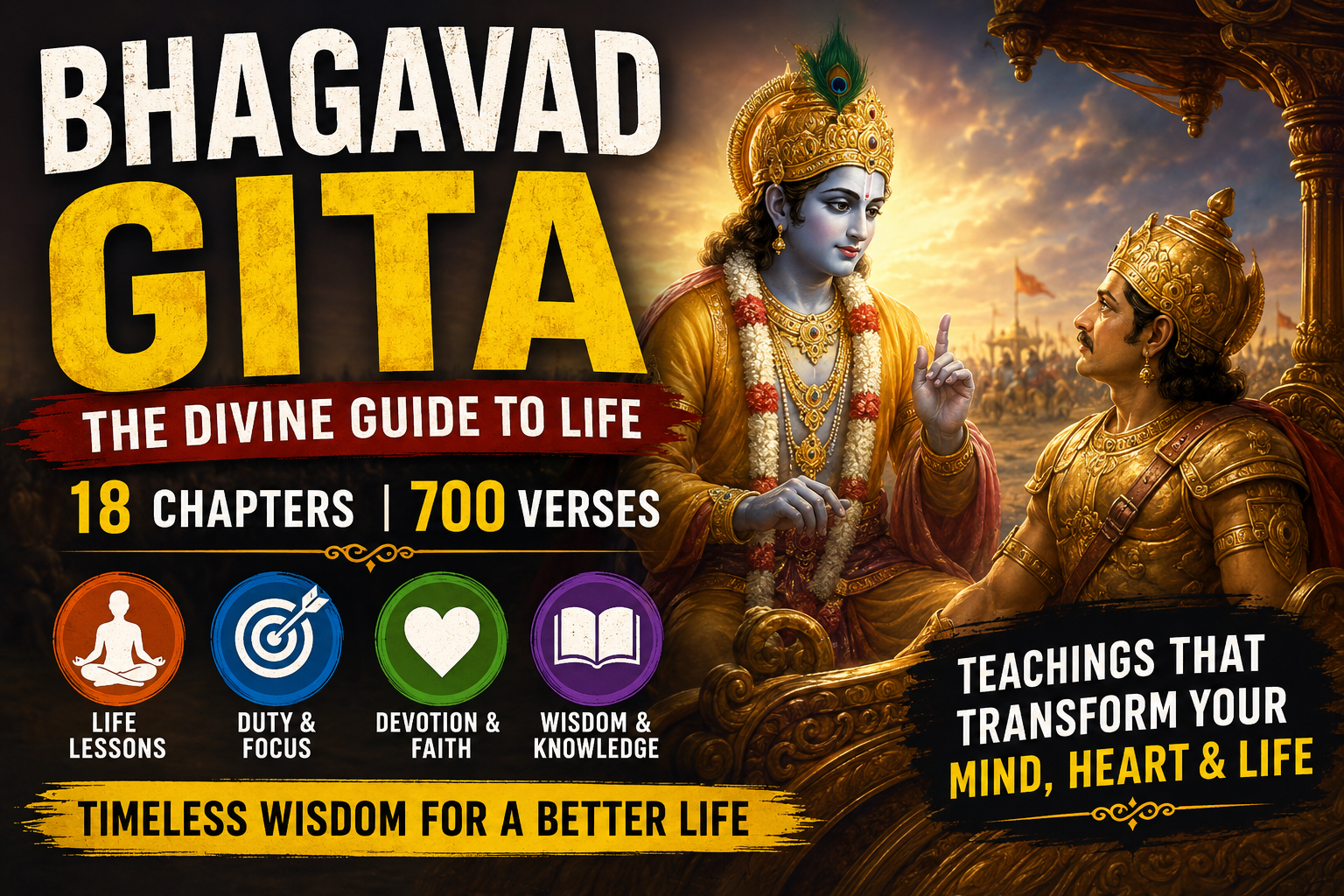
Bhagavad Gita is one of the most revered and influential spiritual texts in the world. It forms a part of the ancient Indian epic Mahabharata and contains the timeless teachings of Lord Krishna to Arjuna. Consisting of 18 chapters and approximately 700 verses, the Bhagavad Gita provides guidance on life, duty, morality, spirituality, and self-realization.
Even after thousands of years, the teachings of the Gita remain relevant and continue to inspire millions of people around the world.

Historical Background
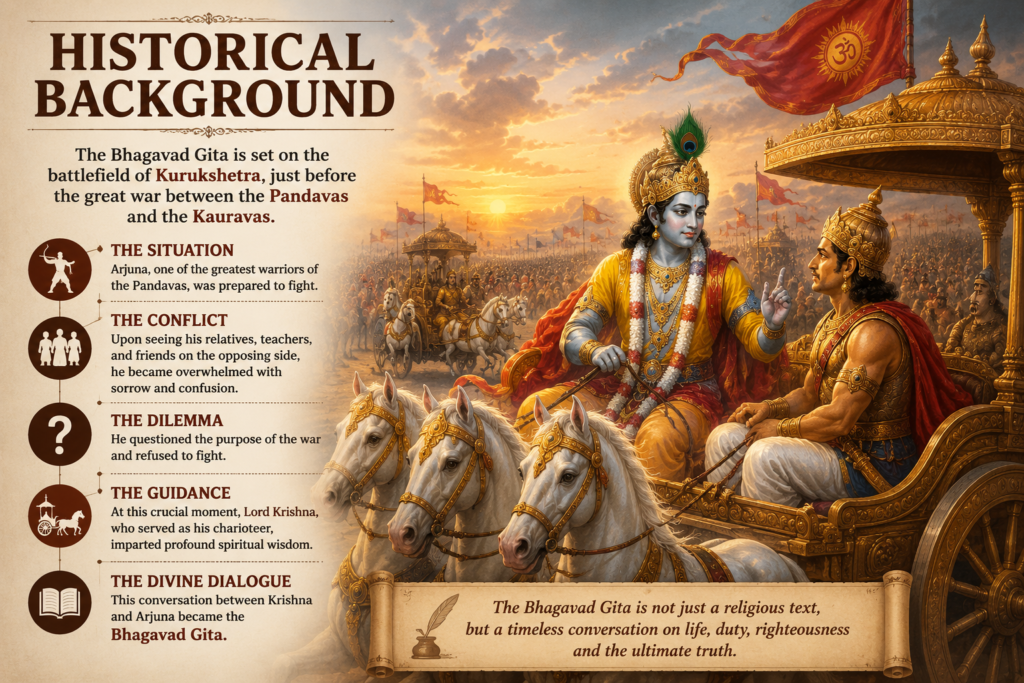
The Bhagavad Gita is set on the battlefield of Kurukshetra, just before the great war between the Pandavas and the Kauravas.
The Situation
- Arjuna, one of the greatest warriors of the Pandavas, was prepared to fight.
- Upon seeing his relatives, teachers, and friends on the opposing side, he became overwhelmed with sorrow and confusion.
- He questioned the purpose of the war and refused to fight.
- At this crucial moment, Lord Krishna, who served as his charioteer, imparted profound spiritual wisdom.
This conversation between Krishna and Arjuna became the Bhagavad Gita.
Main Themes of the Bhagavad Gita
1. Dharma (Duty and Righteousness)
One of the central teachings of the Gita is the importance of performing one’s duty.
Key Lessons:
- Every individual has responsibilities in life.
- Duties should be performed honestly and sincerely.
- One should uphold truth and righteousness even during difficult situations.
- Avoiding duty out of fear or attachment leads to suffering.
2. Karma Yoga (The Path of Action)

Karma Yoga teaches the importance of selfless action.
Core Principles:
- Perform your work without expecting rewards.
- Focus on effort rather than results.
- Success and failure should be accepted equally.
- Selfless service purifies the mind and soul.
Famous Teaching:
“You have the right to perform your duties, but not to the fruits of your actions.”
This principle encourages people to remain dedicated and motivated regardless of outcomes.
3. Jnana Yoga (The Path of Knowledge)
Jnana Yoga emphasizes wisdom and self-understanding.
Important Ideas:
- Understand the difference between the body and the soul.
- Seek truth through knowledge and reflection.
- Remove ignorance through learning and self-awareness.
- Real knowledge leads to spiritual liberation.
4. Bhakti Yoga (The Path of Devotion)
Bhakti Yoga focuses on devotion and love for God.
Benefits of Bhakti:
- Creates inner peace and happiness.
- Reduces fear, anxiety, and ego.
- Strengthens faith during difficult times.
- Brings the devotee closer to the Divine.
Lord Krishna teaches that sincere devotion is one of the easiest paths to spiritual fulfillment.
The Concept of the Soul
The Bhagavad Gita explains that the soul is eternal.
Key Teachings About the Soul
- The soul is never born and never dies.
- Physical bodies are temporary.
- Death is simply a transition from one body to another.
- The true self is beyond physical existence.
This teaching helps individuals overcome fear of death and understand the deeper purpose of life.
Importance of Self-Control
The Gita emphasizes mastery over the mind and senses.
Why Self-Control Matters
- A disciplined mind leads to better decisions.
- Emotional balance helps in difficult situations.
- Self-control reduces stress and confusion.
- Inner discipline leads to personal growth.
Ways to Develop Self-Control
- Meditation
- Positive thinking
- Regular self-reflection
- Practicing patience
- Avoiding excessive desires
Leadership Lessons from the Bhagavad Gita
The Bhagavad Gita is not only a spiritual text but also a guide for leadership.
Leadership Principles
- Lead by example.
- Make decisions based on ethics.
- Stay calm under pressure.
- Accept responsibility.
- Work for the welfare of others.
Many successful leaders and thinkers have applied these teachings in their personal and professional lives.
Life Lessons from the Bhagavad Gita
What We Can Learn
- Stay focused on your goals.
- Never stop performing your duties.
- Face challenges with courage.
- Develop confidence and discipline.
- Treat success and failure equally.
- Practice honesty and integrity.
- Remain humble despite achievements.
- Seek knowledge throughout life.
- Control anger and negative emotions.
- Maintain faith during difficult times.
Relevance in Modern Life
The teachings of the Bhagavad Gita are highly relevant in today’s fast-paced world.
How It Helps Today
For Students
- Improves concentration.
- Reduces exam stress.
- Encourages discipline and hard work.
For Professionals
- Helps manage workplace pressure.
- Promotes ethical decision-making.
- Encourages productivity without attachment to results.
For Entrepreneurs
- Builds resilience during failures.
- Improves leadership skills.
- Encourages long-term thinking.
For Everyone
- Creates inner peace.
- Reduces anxiety.
- Strengthens mental and emotional well-being.
Why the Bhagavad Gita is Important
Major Reasons
- Provides practical guidance for life.
- Teaches spiritual wisdom.
- Encourages moral and ethical behavior.
- Helps individuals discover their true purpose.
- Offers solutions to personal and emotional struggles.
- Promotes peace, balance, and self-realization.
Conclusion
The Bhagavad Gita is much more than a religious scripture; it is a universal guide to living a meaningful and successful life. Its teachings on duty, selfless action, knowledge, devotion, and self-discipline continue to inspire people across cultures and generations. By applying the wisdom of the Gita in daily life, individuals can achieve personal growth, inner peace, and spiritual fulfillment.
Whether one seeks success, happiness, wisdom, or purpose, the Bhagavad Gita offers timeless lessons that remain relevant in every age.
